 Multiverse4all
Same rules as Go, with one extra neighbour
If you know Go, this takes two minutes. If you're new to Go, start with the tutorial below.
White and black below, red and blue above
Two-Layer Go is built on the harmony of yin and yang from the taegeuk. On floor 1, Yang plays white and Yin plays black. On floor 2 the colours change: Yang plays deep red and Yin plays blue. So white and red are one side (Yang), and black and blue are the other (Yin).
陽Yang side
- FLOOR 1
- White stone
- FLOOR 2
- Deep red stone
White and red are one side. A white stone and the red stone directly above it are connected. Yang receives komi 6.5.
Stones of the same side on the same point of different floors are connected: they live together and are captured together.
Five things to remember
Two identical boards
Two boards of the same size (9, 13 or 19 lines) are stacked: a wooden floor 1 and a clear floor 2.
Each floor has its own colours
Floor 1: Yang = white, Yin = black. Floor 2: Yang = deep red, Yin = blue. White and red are the Yang side; black and blue are the Yin side. Yin moves first; Yang receives komi 6.5.
Five neighbours
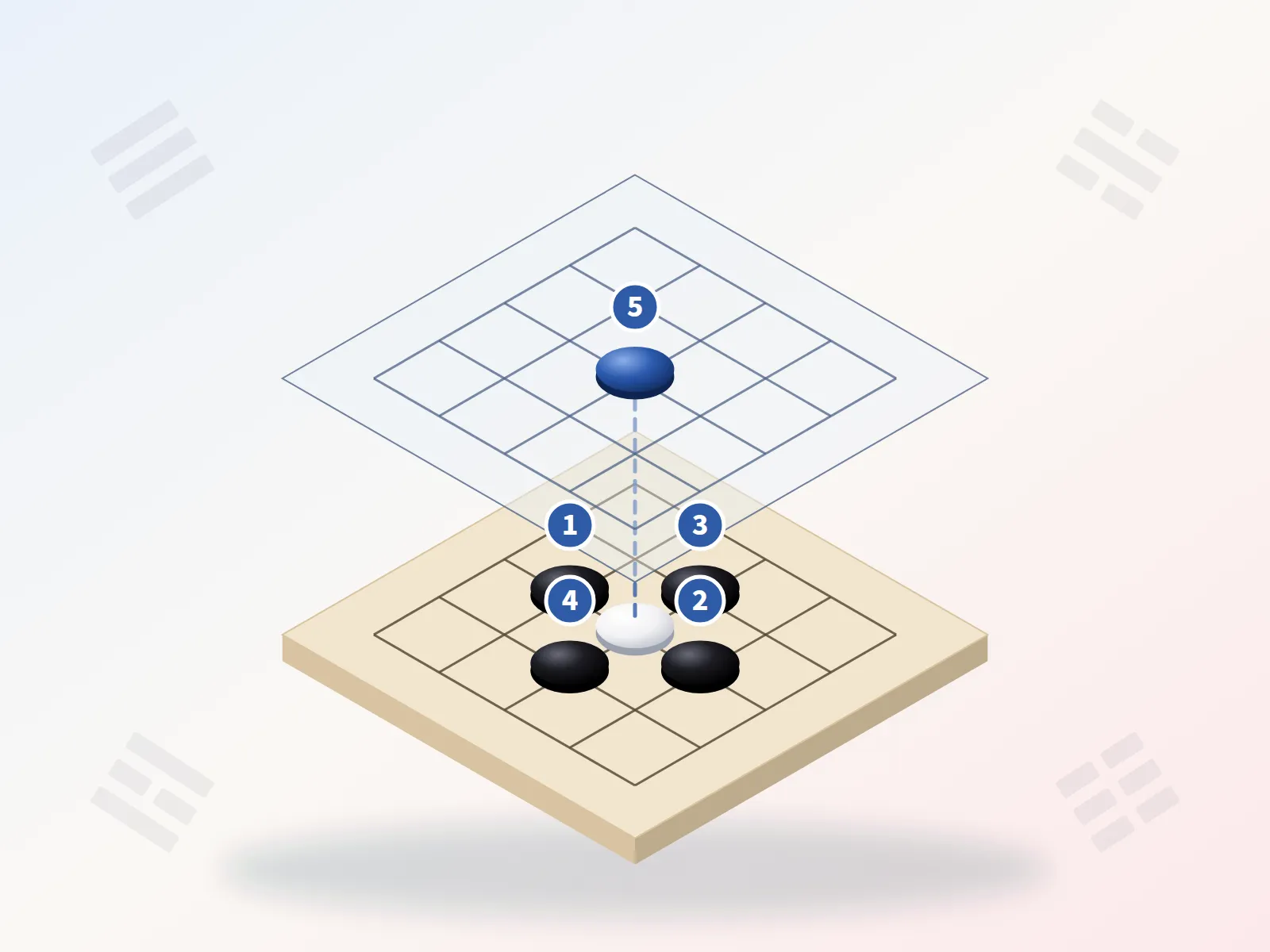
Each point touches the four points around it on its own floor, plus the same point on the other floor. Same-side stones stacked on one point, such as white below and red above, form one group.
Capture needs all five
A stone or group is captured only when it has no liberties left on either floor.
Everything else is classic Go
No suicide, the ko rule and area scoring apply within each floor and between floors. Komi is 6.5.
Surrounded below? Escape upstairs
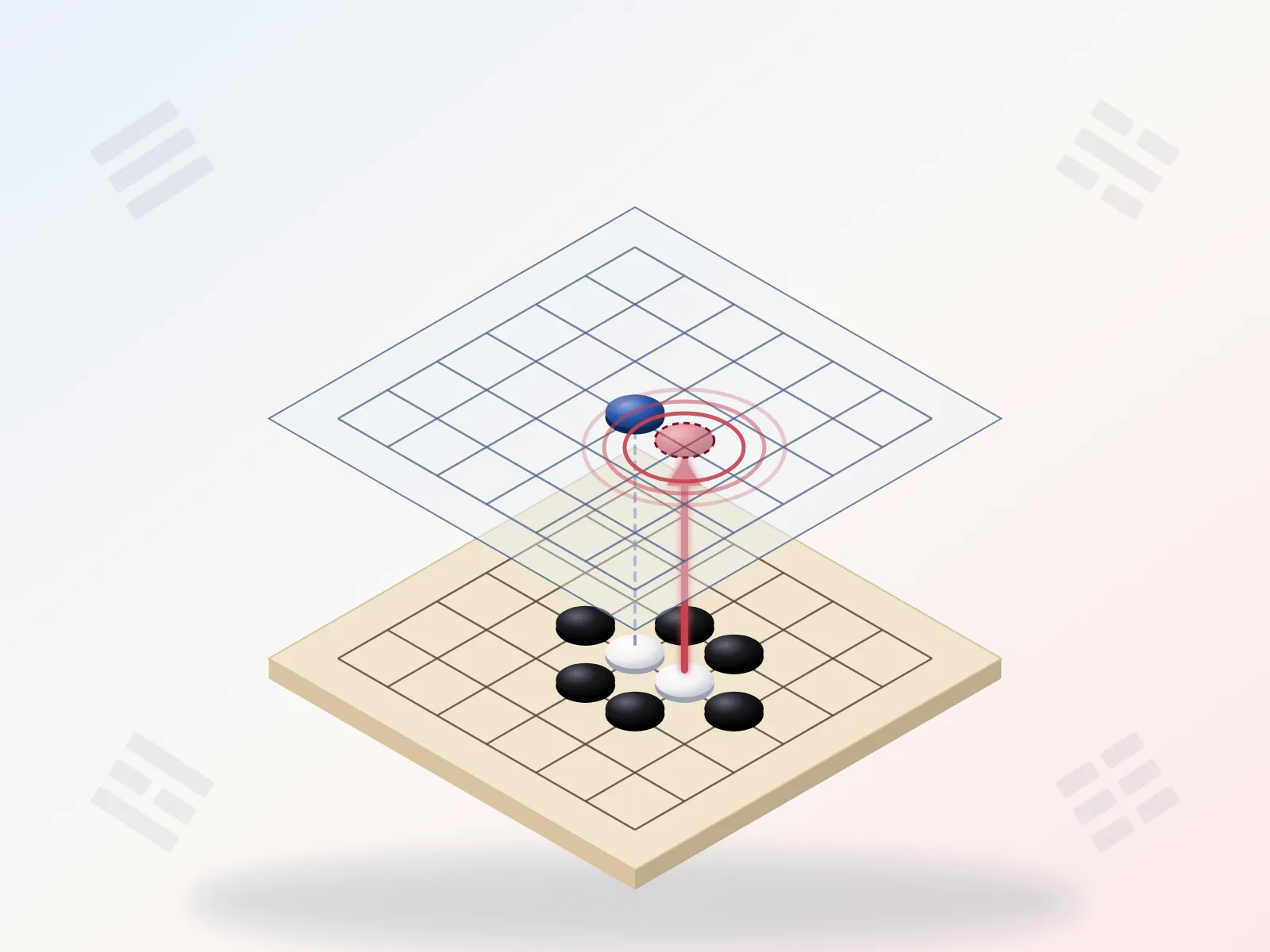
Two Yang (white) stones on floor 1 are surrounded by six Yin (black) stones. In classic Go they are dead. Here they connect upward. Yin (blue) already holds one of the two points above, so the other is the only way out. If Yang puts a red stone there, white and red join and escape; if Yin puts a blue stone there, they are captured.
Read it in 3D, play it flat
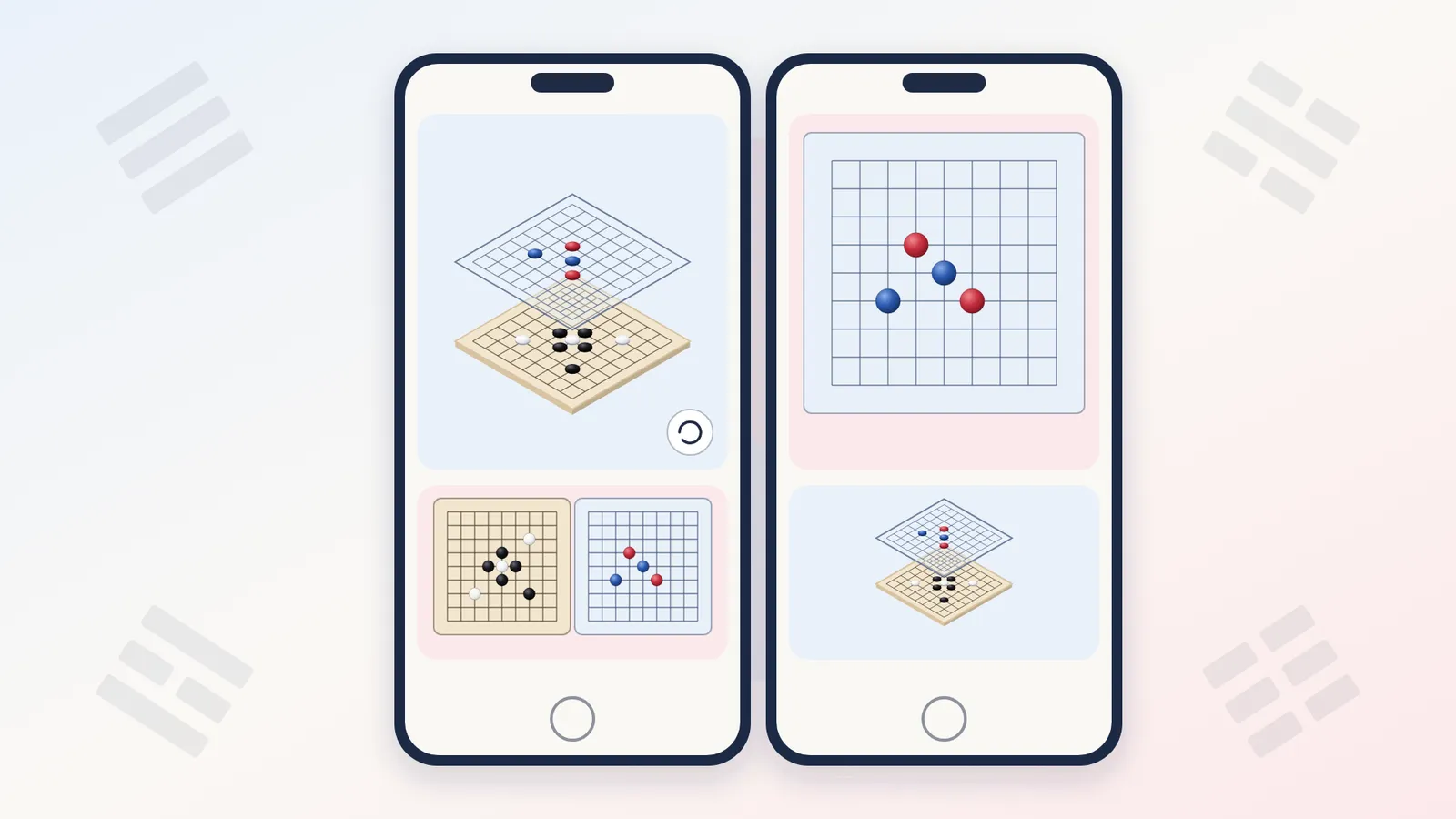
The main view shows both floors in 3D and can be rotated. The side view shows each floor flat, with stones on the other floor showing through as small dots so connections are easy to read. Floor 1 uses white and black stones and floor 2 uses red and blue, so you always know which floor a stone is on.